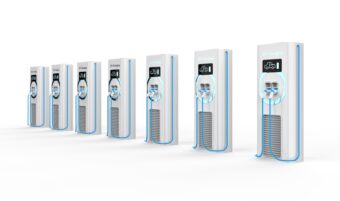
IEEE 2030.5 Accelerator
Driving Renewable Integration with IEEE 2030.5
Empower your clean energy projects with our microservice-based IEEE 2030.5 Accelerator. Designed for DER providers, battery storage manufacturers, and grid operators, this streamlined approach helps you comply with Smart Energy Profile 2.0 standards—faster, cost-effectively, and at scale.

SunSpec Alliance Authorized Test Lab
Codibly is a SunSpec Alliance Authorized Test Laboratory for IEEE 2030.5 and CSIP certification. We test and validate DER products directly — helping manufacturers move from development to certified, market-ready status without third-party coordination delays. Combined with our role as an Official Implementation Partner of the OpenADR Alliance, this positions Codibly as one of few vendors that both build and certify across the protocols that matter most for grid interoperability.
What Is IEEE 2030.5?
IEEE 2030.5 (also known as Smart Energy Profile 2.0 or SEP 2.0) is a communication standard that defines how distributed energy resources (DERs) — solar inverters, battery storage, EV chargers — communicate with utilities and grid operators. It uses RESTful HTTP over TLS for secure, IP-based messaging.
IEEE 2030.5 is mandated by California Rule 21 for all new DER interconnections with investor-owned utilities (IOUs). The Common Smart Inverter Profile (CSIP) specifies which 18 of the 30 IEEE 2030.5 function sets must be implemented for Rule 21 compliance. Similar mandates exist in Hawaii (Rule 14H) and South Korea.
For businesses in these markets, aligning with IEEE 2030.5 not only meets regulatory mandates — it simplifies scalability, strengthens grid stability, and accelerates time-to-market for DER integration.
How Does Codibly’s IEEE 2030.5 Accelerator Work?
Codibly’s accelerator is a microservice-based aggregator that centralizes communication between your DER devices (inverters, solar farms, battery storage) and utility servers. It handles all IEEE 2030.5 protocol logic — device registration, DER program enrollment, status reporting, and control commands — so your team can focus on business logic.
Flexible Aggregator Design
Supports diverse energy devices under one aggregator, allowing universal data mapping and reducing integration headaches.
DER Program Handling
Schedules events, manages capacity constraints, and resolves overlapping grid-service requests automatically.
Robust Communication & Security
Built to handle REST + queue-based workflows. Maps “unusual” device statuses to IEEE 2030.5 properly while maintaining top security standards.
Accelerated Compliance
As a SunSpec Authorized Test Laboratory, Codibly conducts IEEE 2030.5/CSIP certification testing directly — guaranteeing faster certification cycles, reduced risk, and simpler regulatory sign-off.
What Are the Challenges of IEEE 2030.5 Implementation?
IEEE 2030.5 implementation involves several technical challenges that Codibly’s accelerator addresses:
- Complex Device Status Mapping: Many inverters or batteries lack consistent status reporting. Our accelerator normalizes these statuses to comply with IEEE 2030.5’s detailed DER capability and status requirements.
- CSIP Compliance: Only 18 of 30 IEEE 2030.5 function sets are needed for California Rule 21 / CSIP, but identifying and correctly implementing the right subset requires deep protocol knowledge.
- Infrastructure Setup: We combine HTTP REST, message queues, and aggregator logic for high-volume data. Flexible architecture accommodates expansions without major rework.
- Certification Process: SunSpec Alliance administers IEEE 2030.5/CSIP certification. As a SunSpec Authorized Test Laboratory, Codibly conducts compliance testing directly — eliminating the coordination overhead of working through third parties.
By leveraging Codibly’s codebase and domain expertise, you can mitigate integration risks and focus on delivering stable, future-ready energy solutions.
What Are the Use Cases for IEEE 2030.5?
Our IEEE 2030.5 Accelerator paves the way for real-world DER integrations, from solar farms to advanced battery solutions. Here’s how it can be applied:
Solar Farm Integration
Real-time inverter updates, adjusting outputs to meet grid demands. IEEE 2030.5 ensures safe grid connection and fault management via robust standard guidelines.
Battery Storage / V2G
Leverage aggregator logic to optimize charging, discharging, and potential Vehicle-to-Grid (V2G) flows. Unlock advanced grid services while remaining standard-compliant.
Multiple Program Overlaps
Simultaneously handle conflicting DR signals or tariff-based demands, ensuring each asset follows the correct priority set by grid operators.
Who Benefits from IEEE 2030.5 Implementation?
Our IEEE 2030.5 Accelerator is suited for any organization seeking to integrate or manage renewable energy resources with minimal friction and maximal compliance.
Battery & Inverter Manufacturers
Quickly add IEEE 2030.5 compliance features for DER devices, ensuring readiness for programs like California’s Rule 21 or Hawaii’s new policies.
Renewable Developers
Simplify integration of solar farms, wind plants, or multi-DER sites by centralizing real-time data exchange and event handling.
Utilities & Grid Operators
Unify communications with multiple DER providers, reduce integration overhead, and ensure consistent compliance with grid mandates.
Software/Technology Teams
Offload the heavy lifting of standard compliance and focus on building unique features that differentiate your energy solutions.
Why Choose Codibly for IEEE 2030.5?
Codibly combines deep software engineering expertise in renewable energy with hands-on IEEE 2030.5 certification experience. As an Official Implementation Partner of the OpenADR Alliance and a SunSpec Authorized Test Laboratory, we operate at the intersection of protocol implementation and certification testing — a combination few vendors can offer. Our proven track record includes a California Rule 21 certification case study and ongoing work across DER programs in the US and Europe.
Take the Next Step
Ready to adopt IEEE 2030.5 and unlock new possibilities in renewable energy integration? Contact us to explore how our accelerator can seamlessly connect your DERs, meet regulatory mandates, and future-proof your grid solutions.
What our clients say
“We at Charge Solar are thrilled with the enhancements Codibly has brought to our solar calculator tools. Their team not only understood our vision but also delivered a solution that exceeds our expectations in terms of usability, security, and performance. Codibly’s expertise in technology and dedication to sustainability have made them an invaluable partner in our journey to advance renewable energy solutions.”

“I saw value in how flexible Codibly was and in the delivered consulting after the workshops. Codibly explained the trade-offs that would be necessary to save money and time. This is often lacking and helped build trust between us.”

“While there may be several choices in the market for software development vendors, I would strongly recommend considering Codibly if you want a partner who takes a long term approach and offers high standards of professional service.”

“Working closely with Codibly has been instrumental in the successful development of the test tool for OpenADR 3.0. Their expertise and commitment to quality have ensured reliability and effectiveness for the energy industry, and we look forward to continuing our collaborative efforts to advance OpenADR technology.”

“Codibly was more than just a software development company; they were a capable partner who understands the EV industry and helped us push our vision forward.”

“Data analytics and intelligent controls are essential to optimizing advanced energy storage systems, and Codibly helps add this value to our PowerPod system.”

“We have been incredibly impressed by the Codibly team throughout the engagement to date. They have worked hard to understand our priorities and to focus on delivering business value with each feature they develop. The Codibly team is differentiated from the other software development teams we have worked with in the past because they deeply understand the energy domain and so can not only be trusted to deliver high quality software products but also to be a thought partner to our team to ensure we are building the best solution that will help us grow within our market.”

“I highly recommend Codibly for their expertise and business first attitude. Their team consistently meets expectations with their technical proficiency and analytical skills”

“Partnering with Codibly, we aimed to revolutionize renewable energy management in Poland and received more than we hoped for with Re:Poweric. This comprehensive platform not only enhances our market forecasting and maximizes revenue per MWh but also reduces downtime risks, serving a wide range of stakeholders in the renewable energy sector. With features like SCADA+ MultiAsset Management, dynamic market adaptation, and regulatory compliance, Codibly has propelled us to the forefront of renewable energy management, significantly contributing to our mission of advancing sustainable energy use.”

“Codibly’s team brought not just technical expertise but a collaborative approach that was crucial in navigating the complexities of this project. Their ability to integrate seamlessly with our team, adapt to evolving requirements, and consistently deliver high-quality solutions under tight timelines was impressive. Codibly’s commitment to excellence and their deep understanding of the utility sector contributed to the project’s success, enabling us to achieve our goal of transforming our client’s data management and decision support capabilities.”

Frequently Asked Questions
IEEE 2030.5, also known as Smart Energy Profile 2.0 (SEP 2.0), is a communication standard for distributed energy resources (DERs) like solar inverters, battery storage, and EV chargers to communicate with utilities. It uses RESTful HTTP over TLS and is mandated by California Rule 21 for DER interconnection with investor-owned utilities.
CSIP (Common Smart Inverter Profile) is a subset of the IEEE 2030.5 standard that specifies which 18 of 30 function sets must be implemented for California Rule 21 compliance. Rule 21 requires that all new distributed energy resources connecting to California IOU grids use IEEE 2030.5 communication as defined by CSIP. SunSpec administers the CSIP certification program.
IEEE 2030.5 / CSIP certification is administered by SunSpec Alliance. Products must pass conformance testing against the CSIP test specification. Certification can be obtained by directly implementing IEEE 2030.5 in the device or by using a certified IEEE 2030.5 / CSIP gateway. As a SunSpec Authorized Test Laboratory, Codibly conducts compliance testing directly and supports the full certification process — from pre-certification preparation through final sign-off.
Five questions separate suppliers. How many products has their code been certified inside, and under whose name? Can they run the conformance testing themselves, as an accredited test laboratory can, or does every test round go to a third party? Have they worked with the rules of your specific utility programme, which always add requirements above the standard? Do they deliver the server side, the client side, or both? And what is handed over at the end, including source code and test evidence?
CASE STUDIES
See how we’ve helped our partners succeed
CODIBLY WEBINAR
Emerging Trends in Battery Storage: Data, Grids, and Customers
**Recorded on August 1, 2024**: Codibly hosts a webinar featuring Aric Saunders (Advisor, ex-Electriq Power) and Spencer Borison (Head of US at Codibly). They discuss how battery storage underpins renewable energy, focusing on energy management systems, connected devices, VPPs, and demand response.
Learn about the future of storage and renewables, where data, grid interactions, and customer engagement converge to redefine energy efficiency.
Meet our Expert
As a Lead of US at Renewable Energy Practice at Codibly, I drive strategy and business development to grow our footprint in the renewable energy and e-Mobility industries. With a team of over 200 experts, Codibly designs cutting-edge software solutions for leading manufacturers, utilities, and global corporations, helping them innovate and achieve sustainability goals. My experience spans management consulting, digital transformation, and product strategy, with a focus on driving growth and creating value through technology. As Native Coloradan and Columbia MBA, I’m passionate about combining innovation and sustainability to tackle the energy challenges of tomorrow.

CONTACT US
Begin Your Journey to a Smarter Energy Future
our blog