EV Fleet Charging Software Development
We build fleet charging software that gets every vehicle out of the depot on time, at the lowest energy cost your site allows. Custom platforms built on proven accelerators, around your chargers, your vehicles and your grid connection.
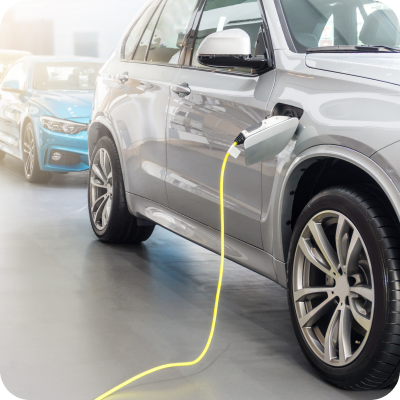
Software for Fleet Charging and Energy Cost
A fleet depot has a fixed grid connection, a schedule that cannot slip, and an energy bill that grows with every vehicle you add. Fleet charging software decides which vehicle charges when, at what power, and from which energy source. Codibly builds that software for fleet operators, charging providers and utilities:
• Departure-based charging: Every vehicle reaches the charge it needs before its next shift, in order of departure.
• Energy cost control: Charging moves to cheaper hours and stays under the site’s peak, so demand charges stay low.
• One view of every charger: Chargers from different manufacturers run on one platform, through OCPP or the vendor’s API.
• Built into your systems: Telematics, fleet schedules, site energy management and utility programs all feed the charging plan.
The result is a depot that can take on more vehicles before it needs a larger grid connection, and an energy cost you can plan.
KEY CAPABILITIES
What Our Fleet Charging Software Does
Charge Scheduling
• Departure-Time Scheduling: Charge plans built from the fleet roster, so the next vehicle out is charged first.
• State-of-Charge Targets: Each vehicle charges to what its next route needs, not always to 100%.
• Pre-Conditioning: Battery and cabin are warmed or cooled while the vehicle is still plugged in, so driving range is kept for the route.
Energy Cost & Load Management
• Dynamic Load Balancing: Available power is shared across chargers in real time, within the site’s limit.
• Peak Shaving: Charging is scheduled away from demand-charge peaks and high-tariff hours.
• Demand Response: The depot responds to utility signals and can take part in flexibility programs.
Chargers, Solar & Storage
• Mixed Charger Estates: AC and DC chargers from different vendors on one platform, through OCPP or vendor APIs.
• Solar & Battery Storage: On-site generation and storage cover peaks and cut grid import.
• Utility Integration: Grid and aggregator signals through open standards such as OpenADR.
Integration, Security & Reporting
• Telematics & Fleet Systems: State of charge and schedules come from the telematics and planning tools you already use.
• Multi-Tenant Security: Separate data for each operator or customer, encrypted connections, and data handling designed for GDPR.
• Energy & Cost Reporting: Energy and cost per vehicle, per site and per kWh, ready for finance and sustainability reporting.
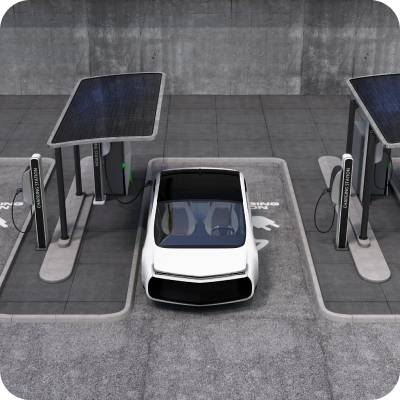
Accelerators and Delivery Experience
Proprietary Accelerators
• Pre-built modules for OCPP, load scheduling and utility integration, so your project starts from working code.
• Multi-tenant patterns for operators that serve several fleets or depots.
• Local edge controllers that keep charging control on site, with low latency.
Delivery Experience
• Fleet charging for utilities: A multi-tenant platform that controls fleet chargers of several types and runs demand response programs.
• Managed charging: A utility-ready managed EV charging platform (see the Banyon Power case below).
• Solar and storage at the site: Charging schedules paired with on-site solar and batteries to shave peaks.
Whether you need a first release, a full platform, or new features for fleet charging software you already run, we start from working code and build it around your depot.
LET’S TALK FLEET CHARGING
Partner with Codibly for Fleet Charging Software
Tell us about your depot: how many vehicles, which chargers, and what limits your grid connection. We will show you where software can cut your energy cost, and which parts of the platform can start from our accelerators.
Book a call with our e-mobility team.
What our clients say
“Codibly was more than just a software development company; they were a capable partner who understands the EV industry and helped us push our vision forward.”

“Working closely with Codibly has been instrumental in the successful development of the test tool for OpenADR 3.0. Their expertise and commitment to quality have ensured reliability and effectiveness for the energy industry, and we look forward to continuing our collaborative efforts to advance OpenADR technology.”

“Codibly worked with us each step along the way to help us quickly implement IEEE 2030.5 CSIP across both the US and Australian markets where we have business. They were an invaluable partner in helping us verify readiness for a key program with SCE and in getting us certified with the SunSpec Alliance. We are excited to continue working with them in the future.”

“Codibly has brought not only technical leadership but also strong market knowledge to help us shape and deliver our MVP. Their collaborative approach and eMobility expertise made a real difference in ensuring we could move fast without compromising quality. We look forward to expanding our platform together.”

CASE STUDIES
See the success stories of our clients


Meet our Expert
As the eMobility Practice Lead at Codibly, I am responsible for driving the strategic development and growth of our electromobility division. With over 15 years of experience in the IT sector, I specialize in building strong client relationships and aligning technology solutions with business objectives. Having spent the last decade focused on the automotive and electromobility industries, I bring a wealth of expertise in delivering tailored solutions for both the public and private sectors. Prior to Codibly, I led the IT teams at Volkswagen Group Poland, where I successfully managed a range of large-scale projects and IT portfolios. Throughout my career, I have consistently focused on delivering both off-the-shelf and custom solutions that address complex business challenges.

Frequently Asked Questions
It decides when each vehicle charges, at what power and from which energy source. It reads the fleet schedule and each vehicle’s state of charge, keeps the site under its grid limit, and moves charging to cheaper hours. Most platforms also monitor the chargers, report energy cost per vehicle and connect to utility programs.
Charging is planned from the fleet roster. Vehicles that leave first get priority, and each one charges to the level its route needs. The system can also pre-condition the battery and cabin while the vehicle is still plugged in, so range is not spent on heating or cooling.
In three ways. It moves charging to lower-tariff hours. It keeps the site’s peak demand down, so demand charges stay low. And it uses on-site solar or battery storage when they are available. Where a utility runs a demand response or flexibility program, the depot can also take part.
Yes. We connect chargers through OCPP, the open protocol most commercial chargers support, and through vendor APIs where a charger needs one. One platform then controls AC and DC chargers across all your sites.
Yes. Our architecture is API-first. We pull state of charge, location and schedules from the telematics and planning systems you already use, so the charging plan follows real vehicle data. The charging platform works alongside those tools; it does not replace them.
CONTACT US
Let’s Talk EV
Find out how Codibly’s consultancy and development services can accelerate your EV business. Book a call and let’s shape the future of eMobility together.

Recommended Articles