The Unified Depot: Integrating EV Charging with Solar and EMS for Fleet ROI
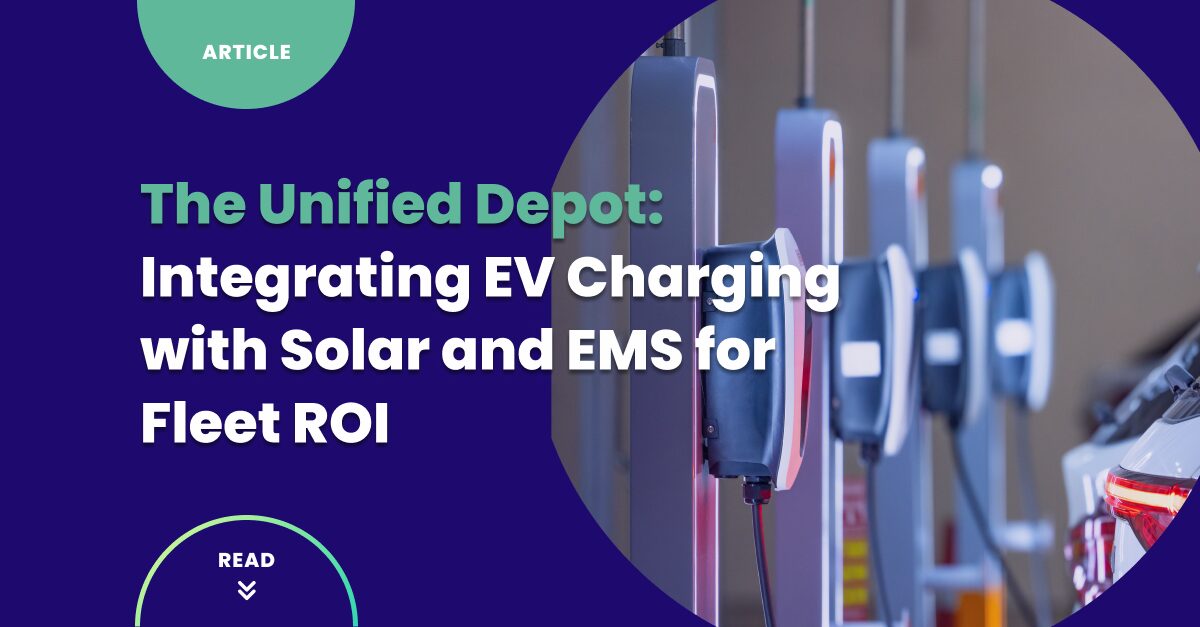
For commercial fleet operators, the electrification of logistics is no longer a question of “if,” but “how much.” As depots transition from diesel to electric, Facility Managers are discovering a harsh reality: unmanaged depot charging is an operational cost nightmare.
The deployment of heavy-duty electric trucks or delivery vans introduces a massive new electrical load to a facility. Without intelligent control, this load can trigger Demand Charges—utility fees based on peak power usage—that can spike monthly energy bills by 30% to 70%.
The solution isn’t just “green” energy; it’s smart energy. The most profitable depots in 2026 will be those that function as a “Unified Depot,” seamlessly integrating EV charging with on-site solar generation and Energy Management Systems (EMS).
The Financial Trap: Why the Grid Isn’t Enough
Relying solely on the grid to power a fleet depot is a financial and physical bottleneck—and it is why depot charging solutions are now a board-level decision, not a facilities afterthought.
- The Cost: Plugging in a fleet of electric vans at 6 PM coincides with peak grid pricing and peak facility load. This “coincident peak” triggers the highest possible demand charges from the utility.
- The Constraint: Many industrial sites lack the transformer capacity to support dozens of DC fast chargers simultaneously. Upgrading this grid connection can take 18-24 months and cost millions.
The Architecture of the Unified Depot
The Unified Depot solves these problems by balancing the EV load against on-site Distributed Energy Resources (DERs). It creates a self-sufficient microgrid where the vehicles, the building, and the generation assets “talk” to each other.
This architecture relies on three critical software components working in concert:
- The Charging Station Management System (CSMS): Manages the EV fleet and communicates via OCPI.
- The Energy Management System (EMS): Monitors real-time solar production and battery storage levels (BESS).
- The Integration Layer: A standards-based bridge that allows the CSMS to throttle charging speeds based on EMS signals.
Use Case: The “Solar-First” Charge
Imagine a logistics depot with a 500kW solar array. In a siloed system, that solar power might be exported to the grid for pennies while the trucks charge at night using expensive grid power.
In a Unified Depot, the EMS detects peak solar production at noon. It signals the CSMS to override the charging schedule, directing power into the vehicles or on-site battery storage immediately. The fleet is charged with “free” electrons, and the facility avoids drawing from the grid during expensive windows.
Overcoming the “Integration Hell”
The barrier to this model has historically been technical complexity. Chargers speak OCPP/OCPI, while solar inverters and battery systems speak Modbus or SunSpec. Getting these disparate systems to communicate often required expensive custom engineering.
The Accelerator Model changes this equation. By using a pre-certified software accelerator that natively supports OCPI 2.2.1 for fleet management and standard integrations for EMS, operators can deploy a Unified Depot architecture in months rather than years. This approach provides the “translation layer” needed to turn a depot into a smart energy asset without the risk of a custom build.
OpEx is the New Battleground
As the EV fleet market matures, the competitive advantage will shift from those who have trucks to those who can operate them most efficiently. A Unified Depot doesn’t just lower your carbon footprint; it fundamentally lowers your cost per mile.
By integrating your chargers with your energy assets, you turn a potential liability—power consumption—into a manageable, optimized resource. The scheduling and dispatch logic that does the turning is covered in our pillar on EV fleet charging software.
